A dedicated workout corner can make home exercise feel easier, more convenient, and more enjoyable. You do not need a large room, expensive machines, or a full home gym. With a small amount of planning, you can create a simple space that supports stretching, strength training, cardio, and other activities.
The best workout corner is one you will actually use. It should be easy to access, comfortable to move in, and simple to keep organized. Here is how to build one step by step.
Choose the Right Location
Start by looking around your home for a space that can hold a yoga mat with enough room to move safely. This may be part of a bedroom, living room, office, basement, or a quiet corner of a larger room.
Choose an area with:
– A flat, stable floor
– Enough space to stretch your arms and legs
– Good airflow
– Adequate lighting
– Easy access to water
– Minimal foot traffic
You do not need to dedicate an entire room. A space measuring about 6 by 6 feet can be enough for many basic exercises. If you plan to use a jump rope, perform larger movements, or add equipment, allow extra room.
Before settling on a location, check the area for nearby furniture, sharp edges, loose rugs, and low shelves. Move anything that could get in the way during exercise.
Measure Before You Buy
Measuring your space helps prevent crowded conditions and unnecessary purchases. Mark the area with painter’s tape if you are unsure how much room you need. Place a mat inside the outline and try a few basic movements, such as reaching overhead, stepping side to side, and lying down.
Think about how the equipment will fit when it is stored, not just when it is being used. A set of dumbbells may look small on a store shelf but can quickly make a corner feel cluttered when combined with bands, blocks, and towels.
Make a short list of your needs before shopping. A simple setup is often more useful than a collection of items that rarely get used.
Start With Basic Equipment
You can build a useful workout corner with a few versatile items. Begin with equipment that supports several types of exercise.
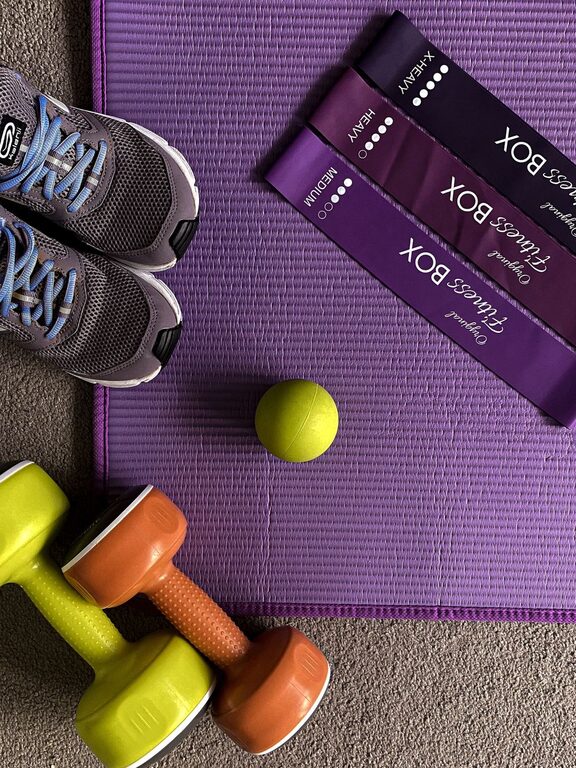
A Comfortable Exercise Mat
An exercise mat creates a clear boundary for your workout and provides cushioning for floor-based movements. Choose a mat that is long enough for you to lie down comfortably and wide enough for stretching.
Look for a surface that offers good grip and is easy to clean. A thicker mat may feel more comfortable on hard floors, while a thinner mat may be easier to roll up and store.
Resistance Bands
Resistance bands are lightweight, affordable, and easy to store. They can be used for many upper-body, lower-body, and mobility exercises. Consider starting with a small set that includes different resistance levels.
Bands can be kept in a basket, drawer, or small storage box. Check them regularly for cracks, tears, or signs of wear, and replace damaged bands.
Light Dumbbells
A pair of light dumbbells can add resistance to simple exercises. If you are new to strength training, start with a weight that allows you to maintain steady control throughout each movement.
Choose weights based on your current needs rather than buying a large collection at once. Adjustable dumbbells can save space, but fixed weights may be simpler to use.
Optional Accessories
As your routine develops, you may find a few additional items useful:
– A stability ball
– Yoga blocks
– A jump rope
– A small step platform
– A foam roller
– A timer
– A storage basket
Add accessories gradually. Every item should have a clear purpose and fit comfortably in your available space.
Plan Simple Storage
Good storage keeps your workout corner inviting and prevents equipment from becoming a trip hazard. Use vertical space whenever possible.
A few practical storage ideas include:
– A wall-mounted rack for resistance bands
– A basket for small accessories
– A narrow shelf for towels and water bottles
– A stand for dumbbells
– Hooks for jump ropes
– A container for cleaning supplies
If you rent your home or do not want to drill into walls, use a freestanding shelf, over-the-door organizer, or sturdy storage box.
Keep the items you use most often within easy reach. Less frequently used equipment can go on a higher shelf or in a nearby closet. Store heavy items on lower shelves to make the setup more stable.
Improve the Atmosphere
The look and feel of your workout corner can affect how often you use it. Keep the design simple, bright, and comfortable.
Good lighting makes the space feel more welcoming and helps you see your surroundings clearly. If natural light is available, place the workout area nearby without blocking windows or walkways.
You can also add:
– A small mirror for checking alignment
– A fan for airflow
– A speaker for music or guided workouts
– A washable towel
– A plant or simple decorative item
Avoid filling the area with too many decorations. The goal is to create a space that encourages movement and remains easy to clean.
Make Safety a Priority
A safe setup is more important than a stylish one. Make sure the floor is dry and free of clutter before each workout. Secure loose cords and move furniture away from the exercise area.
Use equipment as intended and inspect it from time to time. Make sure shelves, racks, and hooks are firmly installed if you use them. Keep heavier objects low and avoid stacking items where they could fall.
Wear comfortable clothing and shoes that suit the activity. If you exercise on a hard floor, use a mat that stays in place. Stop if an exercise causes sharp or unusual discomfort, and choose movements that match your current experience and available space.
Create a Routine You Can Follow
A workout corner is most useful when it supports a realistic routine. Decide when you are most likely to exercise. Some people prefer a short session in the morning, while others find it easier to move after work or during a break.
Keep a simple plan ready so you do not have to decide what to do every time. For example, you might organize your week like this:
– Day one: Full-body strength exercises
– Day two: Stretching and mobility
– Day three: Light cardio
– Day four: Rest or gentle movement
– Day five: Strength and balance exercises
Short sessions count. Ten to twenty minutes of focused movement may be easier to maintain than an ambitious plan that quickly becomes difficult to follow.
Place a small checklist, calendar, or notepad near the workout corner. Tracking completed sessions can help you build consistency without making exercise feel complicated.
Keep the Space Ready
After each workout, return equipment to its storage spot and wipe down surfaces as needed. Roll your mat loosely instead of folding it, and allow damp items to dry before storing them.
Once a week, take a few minutes to:
– Remove dust and clutter
– Check equipment for damage
– Wash towels
– Refill water
– Review your workout plan
– Adjust the layout if something feels inconvenient
A tidy corner lowers the effort needed to begin your next session. If setting up takes only a minute, you are more likely to use the space regularly.
Build Slowly and Adjust
Your workout corner does not need to be perfect from the beginning. Start with a mat, one or two types of resistance, and a storage solution. Use the space for a few weeks, then notice what is missing and what you rarely use.
You may discover that you prefer bodyweight exercises and need very little equipment. Or you may decide to add a bench, heavier weights, or more storage later. Let your habits guide your purchases.
The best home workout corner is practical, safe, and easy to use. By choosing the right location, keeping equipment simple, and creating a routine that fits your day, you can turn even a small area into a reliable place for movement.